

A black background is a bit of a buzzword in high-end audio, but I really like it.
Making music loud isn’t difficult. Making no noise turns out to be very, very hard.
When the music pauses, there should be nothing left behind. No hum. No hiss. No buzz. Just silence.
I’m listening to Clair de Lune by Debussy, played by Lang Lang. The recording is exquisite. The whole piece is so soft, with the quiet passages played with the lightest possible touch on the piano.
I can hear Lang Lang exhale.
I can hear him very gently lift the pedal.
It’s as though the piano is alive, while everything around it has fallen completely silent.
That’s what I mean by a black background.
Turning off the lights
Designing mVista to have this black background is becoming something of an obsession.
There are a number of choices I’m making to achieve it.
Keep the computer and display away from the audio.
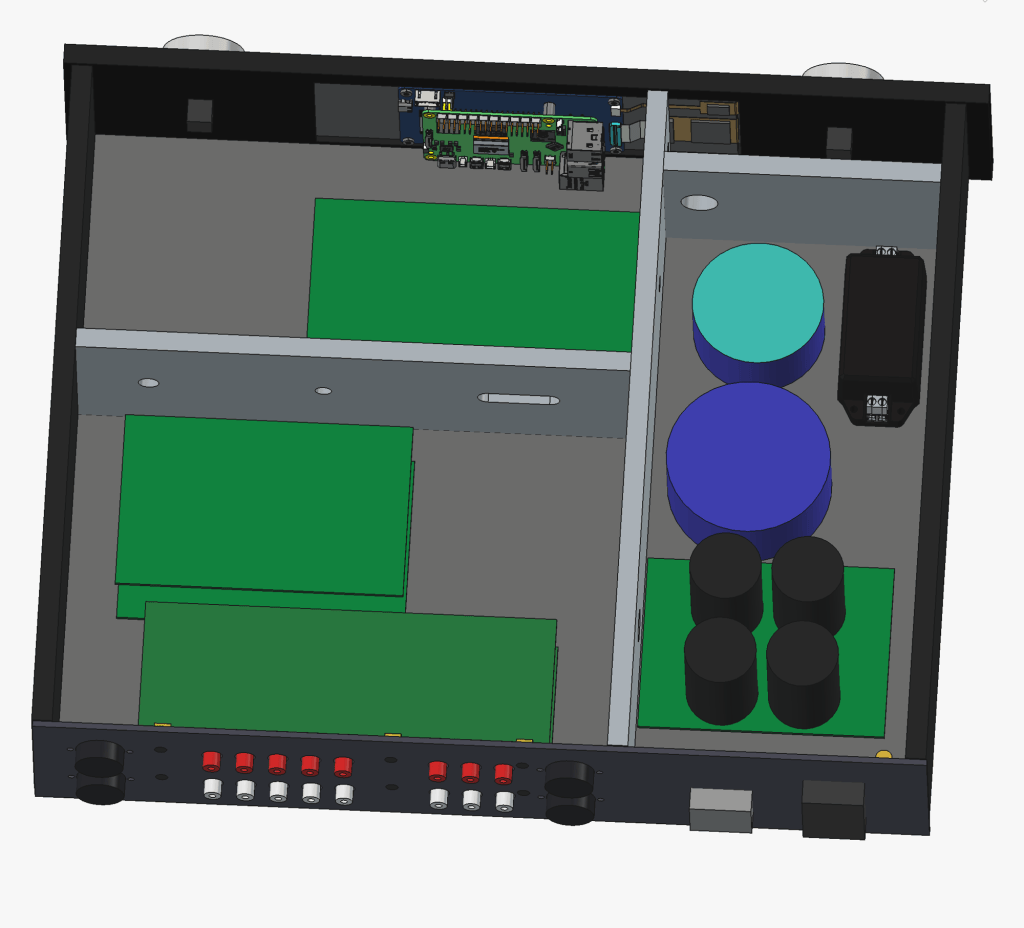
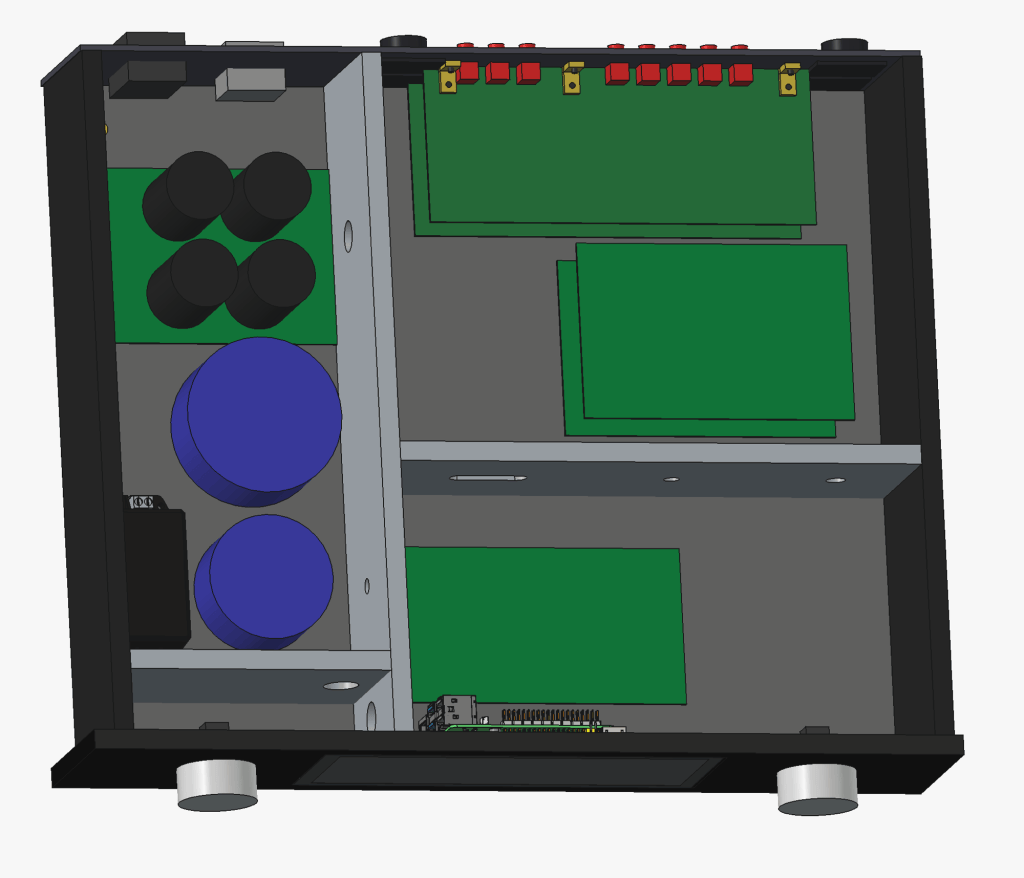
The computing and display electronics can be surprisingly noisy electrically, so they are physically and electrically isolated from the analogue audio circuits. Even the way they are positioned inside the enclosure, and how the PCBs are designed, is part of the solution.
Give the analogue electronics exceptionally clean power.
The audio circuits have their own independent, heavily filtered and regulated power supplies. The idea is simple: don’t allow electrical noise from elsewhere in the system to find its way into the music.
Keep left and right apart.
The two audio channels are designed independently — an approach known as dual-mono. The less the left channel can influence the right, and vice versa, the better. I’m also trying to use fewer components, but making sure that every component that remains is exceptionally good at its job.
Use the enclosure as a shield.
The metal chassis effectively becomes a huge shield, known as a Faraday cage. It helps prevent radio-frequency and electromagnetic noise from getting into the sensitive audio circuits — things like Wi-Fi, Bluetooth and electrical noise generated by modern lighting and electronics.
None of these things on their own will create a black background.
It’s the combination that matters.
Every part of mVista has to do its job exceptionally well, while also being a good team player. Nothing should introduce noise, distortion or interference that another part then has to try to fix.
The ultimate goal is transparency: to remove the electronics from the listening experience as far as practically possible, leaving the music suspended against that black background.
And now we get to the really interesting part.
The next stage is the intricate circuit design and the refined PCB layout of the three boards. This is where the ideas above have to become reality.


Leave a comment